
If you are losing hair, you have probably come across two very different options: hair fixing and hair transplant. The hair fixing vs hair transplant question is common among men in Bengaluru, and the two are not interchangeable. Hair fixing is a non-surgical, cosmetic hair replacement approach. A hair transplant is a surgical procedure carried out by qualified medical professionals.
This guide explains how each works, what affects cost, what upkeep and recovery involve, and how to decide. It is written for men in Electronic City and across Bengaluru who want clear information before speaking to a professional.
What Is Hair Fixing?
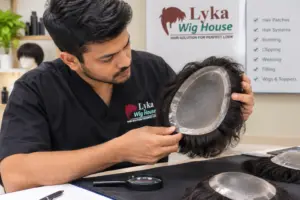
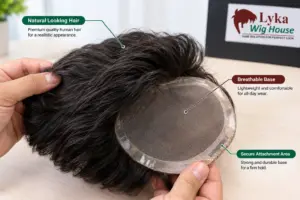
Hair fixing is a non-surgical hair replacement method in which a hair patch or hair system is fitted over the area of thinning or hair loss. It adds coverage on top of your existing hair and scalp. It does not grow new hair.
A hair system usually has a base material with hair attached. The hair may be human hair, synthetic hair, or a blend, and the system is made or selected to match your hair colour, texture, density and hairstyle. Depending on the method, it is secured with bonding, clips, weaving or another attachment technique. Different approaches suit different coverage areas and lifestyles.
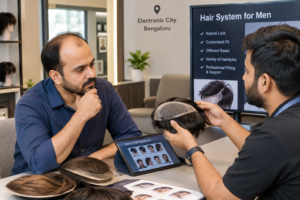
For men, the process typically involves:
- Consultation: discussing the area to be covered, preferred style and maintenance expectations.
- System selection or customisation: choosing base, hair type, density and colour.
- Fitting and blending: securing the system and blending it with your natural hair, often with a haircut.
- Ongoing maintenance: cleaning, servicing and periodic refitting.
Does hair fixing restore natural hair growth? No. It is a cosmetic solution, and the hair you see is part of the system. Your own hair growth is not stimulated or changed by it.
What Is a Hair Transplant?
A hair transplant is a surgical procedure in which hair follicles are moved from a donor area, usually the back or sides of the scalp, to areas with thinning or no hair. The transplanted follicles are intended to continue growing hair in their new location.
The process generally works like this:
- A qualified medical professional assesses your hair loss, scalp, donor hair and overall health.
- If you are considered suitable, a plan is discussed covering the technique and the number of grafts.
- Follicles are harvested from the donor area and placed in the recipient area under local anaesthesia.
- Aftercare follows, and the transplanted hair typically goes through a shedding and regrowth phase over several months.
Recovery, aftercare instructions and visible timelines vary from person to person. Risks and limitations include infection, scarring, uneven results, limited donor hair, and continued hair loss in non-transplanted areas. Not everyone is a suitable candidate, and only a qualified medical professional can say whether you are.
Hair Fixing vs Hair Transplant: What Is the Difference?
The main difference is that hair fixing is a non-surgical cosmetic hair replacement, while a hair transplant is a surgical procedure that redistributes your own hair follicles. Hair replacement and hair transplant are therefore not the same thing: “hair replacement” often refers to non-surgical systems, while a transplant is a medical procedure.
| Factor | Hair Fixing | Hair Transplant |
| Type | Non-surgical, cosmetic | Surgical, medical |
| Surgery and recovery | No surgery or surgical recovery | Surgery with a recovery and healing period |
| Time to get started | Depends on fitting and system selection or customisation | Depends on assessment, planning and scheduling |
| Appearance | Customisable hair type, density, colour and style | Depends on donor hair, technique and individual healing |
| Maintenance | Regular care, servicing and refitting | Aftercare initially; ongoing needs vary |
| Long-term considerations | Systems wear and may need repair or replacement | Hair loss may continue in other areas; further treatment may be discussed |
| Expenses | Initial cost plus ongoing upkeep | Procedure cost plus assessment, medication and follow-up |
| Suitability | Depends on preference, scalp and lifestyle | Depends on medical assessment and donor hair |
| Professional support | Trained hair replacement specialists | Qualified medical professionals |
Hair Fixing vs Hair Transplant Cost: Which Costs More?
There is no single answer, because the total cost depends on the method you choose and your individual requirements. We have not listed exact prices here, since quotes vary between providers. What matters is the difference between initial cost and total cost over time.
For hair fixing, cost is influenced by:
- Hair quality, and whether it is human or synthetic hair
- Base material and system size
- Density and customisation
- Fitting and attachment method
- Cleaning, servicing, repairs and eventual replacement
- How often you wear it and how often upkeep is needed
For a hair transplant, cost is influenced by:
- The clinic and medical team
- The procedure recommended
- The extent of hair loss
- The number of grafts considered appropriate
- Pre-procedure assessment
- Medication, follow-up and aftercare, where applicable
A lower upfront figure does not always mean a lower total spend. Hair fixing may involve recurring upkeep, while a transplant concentrates much of its expense at the start. Before deciding, ask each provider for an itemised estimate that covers upfront and ongoing expenses.
What Are the Advantages and Limitations of Hair Fixing?
Potential advantages:
- A non-surgical approach with no surgical donor-area procedure
- No surgical recovery period of the kind associated with transplantation
- Customisable appearance, including colour, density and style
- Options for different coverage areas and hairstyles
Limitations:
- Regular maintenance is needed, and no system is maintenance-free
- Attachment and fitting need to be done correctly
- Systems can wear, get damaged or need replacement
- Results depend on correct care and servicing
- Comfort and suitability vary from person to person
What maintenance does hair fixing require? Typically it involves gentle cleaning, appropriate products, periodic servicing, and refitting or adjustment at intervals your specialist recommends. The exact schedule depends on the system, the attachment method and your routine.
What Are the Benefits and Limitations of Hair Transplantation?
A hair transplant uses your own follicles, so the transplanted hair is intended to grow in its new location. That is the main reason people consider it. It does come with important limits:
- It needs a professional medical evaluation to determine suitability.
- Recovery and aftercare are required.
- Possible complications exist, and results can vary.
- Donor hair is finite, which limits how much can be transplanted.
- Existing hair may continue to thin, and a medical professional may sometimes discuss further treatment.
Hair transplantation does not permanently solve every type of hair loss, and not every person is a suitable candidate. A qualified doctor can discuss realistic expectations after examining you.
What Is Non-Surgical Hair Replacement?
Non surgical hair replacement is a cosmetic approach that adds hair coverage using a hair system, patch or similar solution, without surgery. The terms non surgical hair fixing and hair restoration without surgery are often used for the same idea. Strictly speaking, these methods replace or cover hair cosmetically; they do not restore your natural hair growth.
For men who want hair replacement without a surgical procedure, the process rests on three things:
- Consultation: a conversation about your hair loss pattern, goals and routine.
- Appropriate system selection: matching base, hair type, density and attachment method to your needs.
- Fitting and maintenance: correct fitting at the start, then regular servicing.
Because the system is selected or made around the individual, it can be tailored to your look. How well it works for you depends on that fit, the care it gets and your comfort with wearing it.
Hair Fixing for Men: Is It Suitable for Everyday Use?
Many men consider hair fixing for everyday wear, but suitability depends on the person, the system and the routine. No option fits everyone, and comfort and durability vary. Points worth thinking through:
- Work and daily routine: long hours, commuting and office or outdoor work all affect wear.
- Preferred hairstyle: some styles and attachment methods suit certain systems better.
- Comfort and fit: you should be comfortable wearing it for extended periods.
- Exercise and perspiration: sweat, gym sessions and swimming may need extra care or a different attachment method, so ask your specialist.
- Travel: think about how you would handle cleaning and upkeep on the road.
- Grooming habits: are you comfortable with regular care?
- Maintenance schedule and budget: servicing visits and upkeep are ongoing commitments.
A good provider will talk through these openly rather than promise a one-size-fits-all outcome.
Hair Replacement vs Hair Transplant: How Should You Choose?
Is hair fixing better than a hair transplant? Neither is better for everyone. The right choice depends on your priorities, your hair loss, your budget and your comfort with surgery and maintenance.
Hair fixing may be worth exploring if:
- You prefer a non-surgical cosmetic option.
- You want a customised appearance.
- You are comfortable with regular maintenance.
- You prefer not to undergo a surgical procedure.
A hair transplant consultation may be worth exploring if:
- You want to understand surgical hair restoration.
- You want a medical assessment of your hair loss and donor hair.
- You are willing to discuss recovery, risks, suitability and expected outcomes with a qualified medical professional.
Before choosing, ask yourself or your provider:
- What exactly will I be getting, and what will it not do?
- What is the full cost over time, including upkeep or follow-up?
- How much maintenance or recovery is involved?
- What are the risks and limitations?
- What happens if my hair loss progresses?
If you are unsure whether surgery is appropriate, start with a medical assessment. You can still explore non-surgical options alongside it.
Where Can You Find Hair Fixing Services in Electronic City?
If you are looking for hair fixing services in Electronic City, Bengaluru, Lyka Wig House offers non-surgical hair replacement for men and others. Their services include hair fixing, hair patches for men, hair replacement for men, hair bonding, hair clipping, hair weaving, hair filling, and wigs and related solutions.
Lyka Wig House is a hair fixing and hair replacement service provider. It does not perform hair transplantation or provide medical treatment. If you want a surgical opinion, consult a qualified medical professional.
When you contact them about non-surgical hair replacement in Electronic City, you can discuss your coverage area, the look you want, how much maintenance you are comfortable with, and which methods may suit your lifestyle. Men across Bengaluru researching hair replacement can also use that conversation to compare options before deciding.
Looking for hair fixing services in Electronic City, Bengaluru? Contact Lyka Wig House to discuss your hair replacement needs and explore suitable non-surgical options.
Final Thoughts
Hair fixing and hair transplantation answer different needs. Hair fixing is a non-surgical cosmetic hair replacement option. A hair transplant is a surgical procedure that requires medical assessment. Cost should be weighed together with maintenance, recovery, suitability and long-term expectations, and the right choice depends on your preferences and circumstances.
If you would like to explore hair fixing, you are welcome to speak with the team at Lyka Wig House in Electronic City, Bengaluru, with no pressure to decide. For anything involving surgery, consult a qualified medical professional.